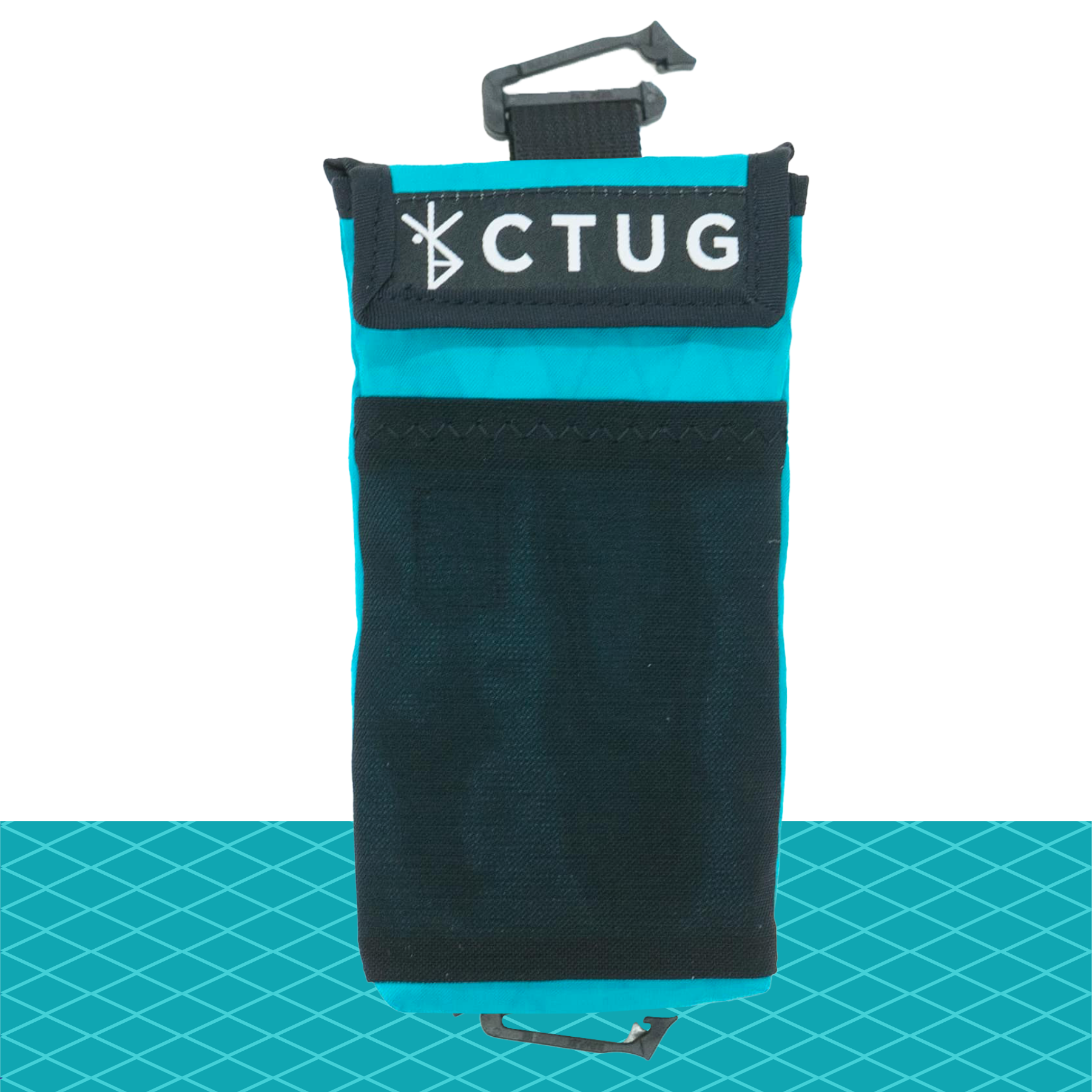

Most advice on bottle bounce tells you to buy a snugger sleeve or switch to a smaller bottle. That advice misses the actual problem. Bounce is almost always an attachment issue, and once you understand what's actually swinging and why, it's a five-minute fix instead of a return.
We've been building shoulder strap water bottle holders since right after our own PCT thru-hike in 2018, when a homemade bottle rig safety-pinned to a pack strap turned into a real product. Along the way we've heard just about every version of "my bottle holder won't stop swinging." The fix is almost always the same three things: rim stiffness, clip tension, and placement. Here's how each one works.
Why Water Bottle Holders Bounce in the First Place
Sway happens when the top of the holder can move independently of your pack. A bottle that's locked into a rigid, cinched-down pocket doesn't have anywhere to go. A bottle sitting in a loose, floppy pocket does, and every step leaves a little room for it to swing.
Before shoulder strap holders existed in their current form, most people improvised. Side pockets meant reaching back mid-stride. Water bladders worked until a seam popped and soaked everything in the pack. Even a simple stuff sack safety-pinned to a strap, which is genuinely how this product got its start, still had the same core problem: nothing was holding the top of the container in a fixed position, so it moved a little with every step.
The Rim Is Doing More Work Than You Think
Why a Soft Mesh Rim Causes Sway
The rim, meaning the opening at the top of the sleeve, is the single biggest factor in whether a bottle stays put. If that opening sags or collapses when the bottle isn't perfectly seated, the bottle has room to tilt. Once it can tilt, it can swing, and once it can swing, it will, especially going downhill or moving at a faster clip.
A lot of lightweight mesh options use a stretchy, four-way material because it can accommodate almost any bottle diameter. That flexibility is the tradeoff. The same stretch that makes it universal also makes it loose, and loose materials move.
How a Stiffened Rim Keeps a Bottle Locked in Place
We use a doubled-over XPac VX07 rim specifically because it stays open on its own. You can drop a bottle in one-handed without the top folding in on itself, and once it's in, the rim isn't flexing around with each stride. The front panel uses a stiffer mesh rather than a stretch fabric for the same reason.
This costs a few grams over a softer build, but we've tested lighter materials, including a ripstop and mesh combination that saved weight but didn't hold its shape and didn't last. The tradeoff we landed on is simple: add a little weight where it buys real stability, and stay lightweight everywhere else. That's the same logic behind most of our gear decisions. Ultralight doesn't mean lightest possible at every single point. It means being deliberate about where the ounces go.

Getting the Attachment System Right
Clips, Webbing, and Why Tension Matters
Even a perfectly rigid sleeve will bounce if it isn't attached tightly. Our system uses S and G clips connected to 1 inch adjustable nylon webbing, which lets the sleeve cinch down against nearly any pack's gear loop or daisy chain. When people tell us their holder feels wobbly, the webbing tension is usually the first thing worth checking. A sleeve that's clipped on but left loose is going to move no matter how stiff the rim is.
The Pinch Technique Nobody Explains
The most common issue we hear about isn't bounce. It's people struggling to close the S and G clips in the first place. There's a specific pinch technique that makes it easy, and once people see it, they don't have trouble again. If you've been forcing the clip closed rather than pinching it at the right spot, that's worth fixing before you assume something's wrong with the sleeve. Our waterbottle sleeve overview video walks through exactly how to make gear adjustments that will help you in the long run.
Where You Place It on the Strap Changes Everything
High, Low, or Somewhere in Between
There's no single correct spot on the strap. The right placement is whatever's comfortable and out of the way of your pack's other straps or a hip belt. If a sleeve feels like it's bouncing more than expected, sliding it a few inches up or down the webbing can change how it moves entirely, since it shifts how close the weight sits to your body. Our adjustment video covers how to move it around and make it work for you and your preferences..
A Real Example of Creative Placement
One customer clipped her sleeve low on the webbing so it rode near her hip almost like a holster, with a phone pocket attached below it. It didn't interfere with her trekking poles and solved a fit issue that a factory setup wouldn't have. That's the point of an adjustable system. If something isn't working, the answer is usually to fiddle with it rather than assume it's broken. Don't be afraid to move things around until they sit right for your body and your pack.
Common Misconceptions About Bottle Bounce
A different size sleeve will fix bounce. Sizing affects whether your bottle fits, not whether it swings. A properly sized sleeve with loose webbing will still bounce. A well-cinched sleeve with the correct diameter won't.
All mesh materials perform the same. They don't. Stretchy four-way mesh flexes to fit more bottle shapes, but that same stretch means more movement. A stiffer material holds its shape and holds the bottle still.
Bounce means the product is defective. Almost always it means the attachment needs a re-cinch, not a return. Check webbing tension and rim seating before assuming anything is wrong.
A Quick Note on Sizing
Sizing is a separate topic from bounce, but it's worth a quick mention since the two get confused. Diameter is what matters most for fit, not height, and we go into that in more detail in our prior post on choosing the right backpack water bottle holder. If your bottle fits the sleeve but still swings, sizing isn't your problem. Come back to the rim, the clips, and the webbing tension instead.
Is Your Backpack Even Compatible?
Most backpacking packs have a gear loop or daisy chain on the shoulder strap that works fine with an attachment system like this one. Some minimalist day packs skip these features entirely, which limits where you can clip on accessories. If your pack doesn't have an attachment point, that's a pack design limitation rather than something you can fix with tension or placement.
Quick Setup Checklist
-
Cinch the webbing snug against the pack, not just clipped and left loose
-
Confirm the clip is fully pinched and seated, not forced shut
-
Try a few placement heights before settling on one
-
Do a short test walk with a full bottle before committing to a long hike
Carrying weight this way changes your gait slightly compared to carrying everything inside the main pack. Research on load carriage backed by the National Institutes of Health has found that how a load is distributed and stabilized on the body has a measurable effect on gait and energy use, which lines up with what a lot of hikers notice firsthand: a load that's cinched tight and close to the body feels easier to carry than one that's loose and swinging.

FAQ
Why does my water bottle holder swing when I walk?
It's almost always loose webbing or a soft rim that isn't holding its shape. Check that the attachment is cinched tight and that the bottle sits fully seated in the sleeve before assuming the product is the problem.
How do I attach a water bottle holder to my backpack strap?
Most systems clip onto the gear loop or daisy chain found on the shoulder strap of nearly any backpacking pack. Ours uses S and G clips with adjustable webbing so it can span different attachment point lengths.
What's the best way to keep a water bottle from bouncing on a hike?
Start with tension. A snug attachment against the pack does more to stop bounce than switching bottle sizes. From there, a stiffer rim material helps keep the bottle from tilting in the first place.
Do all backpacks have attachment points for shoulder strap gear?
No. Most backpacking packs do, since a gear loop or daisy chain is a standard feature. Some minimalist day packs leave these off entirely, which limits compatibility.
How tight should a shoulder strap water bottle holder be?
Tight enough that the sleeve doesn't shift independently from the pack when you walk, but not so tight that it's uncomfortable against your chest or shoulder. If you can push the sleeve and feel it flex away from the strap, it needs more tension.
Can I adjust where a water bottle holder sits on my strap?
Yes, and it's worth experimenting with. Moving the sleeve a few inches up or down the webbing changes how the weight sits against your body and can solve bounce that a tension fix alone doesn't.
Getting It Right
Bottle bounce isn't a sign you bought the wrong gear. It's usually a sign the setup needs a few minutes of attention: check the tension, check the rim, and don't be afraid to move things around until they sit right. That's exactly why we built ours the way we did, with a rim that holds its shape and a clip system that locks down tight, so the fix is rarely more complicated than a re-cinch. If you're still working through fit or placement, our setup and adjustment videos walk through it step by step, or you can always reach out and we'll help you sort it out.