
What Are the Real Thru-Hike Essentials? (And Where to Actually Keep Them)
Every hiker has their own version of this story. You get home from a trip, start unpacking, and find something at the bottom of your bag that you never touched. Still rolled up, sealed, and carried every single mile for nothing.
For a day hiker it might be the extra pair of socks or the emergency poncho you bought at REI because it felt responsible. For someone on a longer trail it could be a whole category of gear that sounded necessary in the planning stage and turned out to be completely irrelevant in practice.
The overpacking problem is real, but it's only half the equation. The other half are those items you needed constantly and couldn't get to fast enough. It may have been water you had to stop and dig for. A snack buried under your rain jacket. A phone that required an extra hand to reach. The things you use every hour deserve a completely different system in your pack than the things you might use once at camp, or never.
The Gear That Gets Touched Every Hour vs. The Gear That Stays Packed
Some packing guides treat everything in your bag the same. They give you a list of categories and let you figure out the organization. But the honest way to think about your gear is to sort it into two buckets: what you reach for constantly while moving, and what you only dig out at camp.
Hourly-access gear is what you would expect: water, snacks, lip balm, phone or camera, rain jacket if the weather is unpredictable, and trekking poles in hand. These are the things that need to be immediately reachable without breaking your stride or shrugging off your pack.
Camp-only gear is everything else. Your sleeping system, cook kit, extra layers, first aid kit, tent or tarp. You need these things, but you don't need them at mile 8 on a Tuesday afternoon. They can live deeper in the pack.
Packing in a more strategic way can prevent those stops where you have to take off your pack to grab what you really need. Most people don't make this distinction consciously when they're packing, especially on their first few trips. They put things wherever they fit. Then they spend the whole hike contorting to get to stuff they need constantly, while the things they rarely touch are the easiest to grab. Flipping that around makes a bigger difference than most gear upgrades.
Quick-Access Carry: What Goes Where
Your Shoulder Strap Is Prime Real Estate
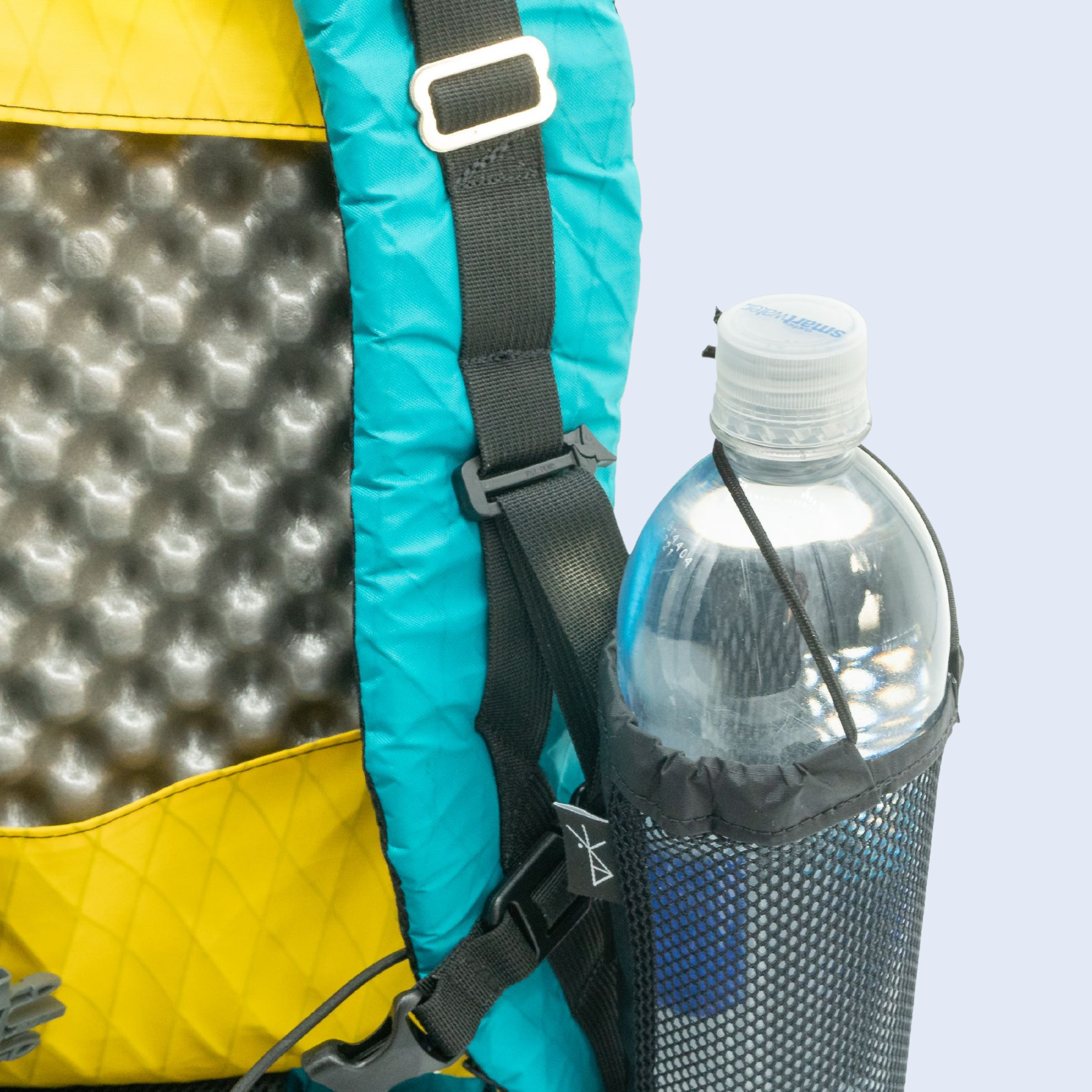
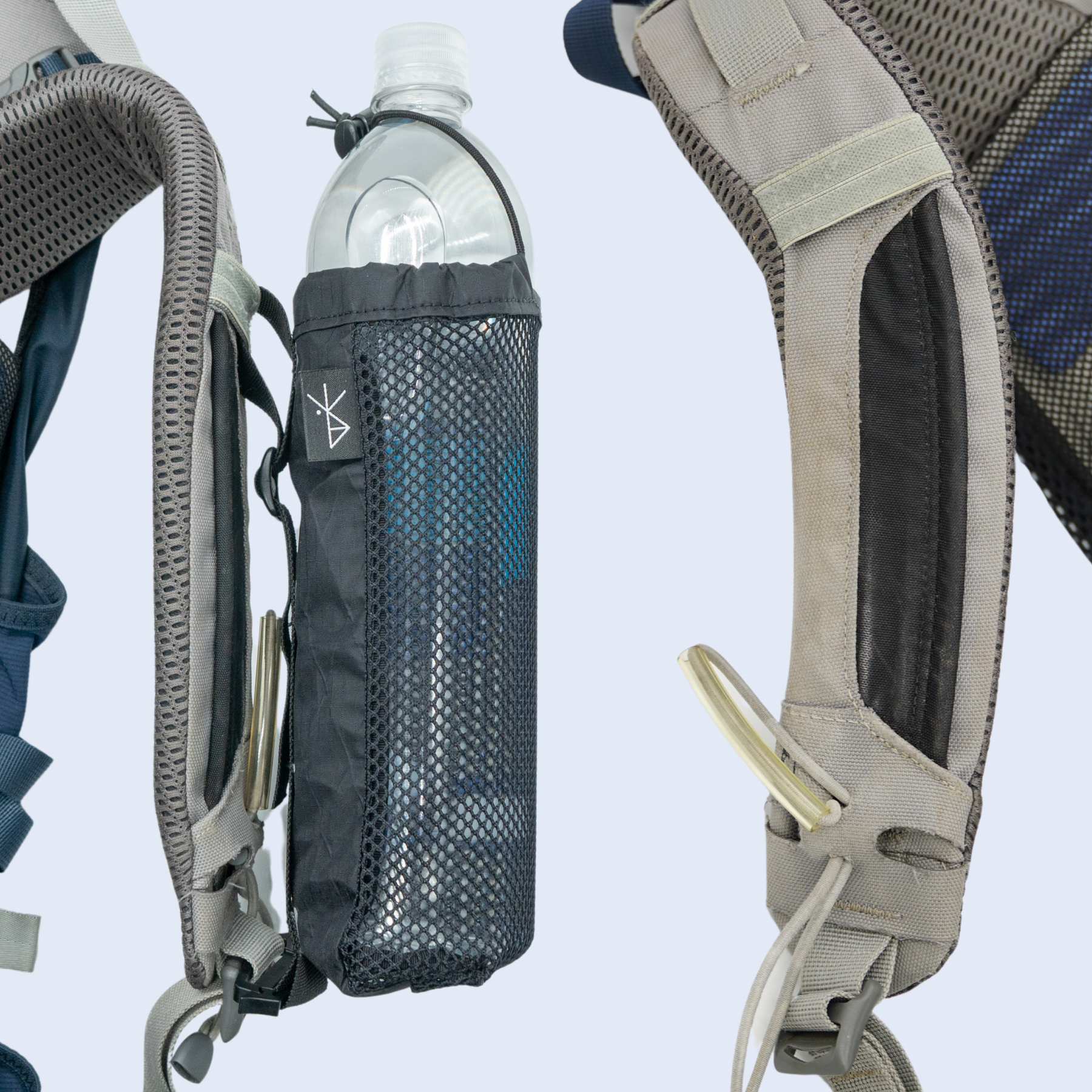
The shoulder strap is the most overlooked storage zone on a backpack, and it's the most valuable one for anything you reach for while moving. Water is the obvious one. Having a water bottle sleeve on your shoulder strap means you drink more and more often, without stopping. On a hot day or a long climb, that makes a difference.
Beyond water, a shoulder strap pouch is a good spot for a small snack pocket, a phone if you're someone who checks navigation or takes photos often, or a compact accessory pocket for things you want in the first two seconds of stopping.
Using that shoulder strap for quick-access items is one easy way to level up your setup. It's a small adjustment that feels pointless until you've hiked with it for a day or so, and then going back feels simply annoying. You can learn more about how shoulder strap gear works and which size fits your bottle at CTUG's accessories page.
Hip Belt, Side Pockets, and the Top Lid
Hip belt pockets are helpful for small things you need while standing still but not while moving: lip balm, electrolyte tablets, a granola bar, maybe a headlamp if you're starting before dawn. They're easy to reach without removing your pack, but they're small, so be selective.
Side pockets are for things you grab at breaks but not mid-stride. Overflow water capacity is the most common use. Some hikers keep a tent or packable gear here too, which frees up internal space. I prefer to have my primary water on my shoulder strap, which frees up extra space in those side pockets.
Top lids or brain pockets are for trip logistics: permits, maps, a headlamp you're not planning to need until camp, first aid items you'd want fast in an emergency but hopefully never touch. Day hikers can use this space for a rain jacket or an extra layer since weather changes are common.
How the Setup Changes by Trip Type
On a well-watered trail in the Pacific Northwest, one bottle on the shoulder strap is probably enough. You're never more than a mile from a water source, and you're filtering frequently.
A desert water carry is a totally different situation. On a dry 20-mile stretch of the PCT, you might need to carry five liters. That means both shoulder straps loaded with water, bottles in the side pockets, and every accessible pocket working together. The setup that works in the Cascades won't get you through the Mojave. It's worth thinking through your specific route before you pack, not just copying a generic gear list.
Day hikers have their own version of this. You're probably not carrying five liters, but the core principle still holds: the things you reach for every half hour deserve to be the most accessible things on your body.

Choosing a Pack: The Decisions That Actually Matter
The Most Common Pack Mistake
People tend to choose a pack based on brand recognition and volume, then realize three days in that it doesn't work well with how they actually move. The bigger oversight is buying a casual weekend pack for a multi-week or multi-month trip without thinking about how the attachment points, strap design, and storage layout will perform over hundreds of miles.
For day hikers, the pack choice question is simpler but still worth thinking through. A pack that fits well and sits comfortably on your back matters more than brand or volume. If you're already eyeing a longer trip down the road, it's worth choosing something with a little versatility built in rather than buying twice.
What "Ultralight" Actually Means in Practice
If you're curious about going lighter but don't want ultralight to become your whole personality, going from a Nalgene to Smart-Water bottle is the easiest place to start. It costs nothing if you're buying the water anyway; the bottles are reusable for hundreds of miles with basic cleaning, and the weight difference is immediately noticeable. One swap, no gear research rabbit hole required.
From there, lighter doesn't have to mean less durable. The water bottle sleeve construction at CTUG is a good example: reinforced mesh adds a few grams over cheaper alternatives, but they're what make one-handed bottle deposits actually work. Sometimes a little extra weight is doing real work.
The Packing Process
What First-Timers Pack That Experienced Hikers Don't Pack Twice
Extra clothes are the most common thing that we see overpacked. People bring two or three backup outfits on their first trip, but end up wearing the same thing every day anyway. The "just in case" category tends to get brutal on a long trail.
The other big one is not testing the full kit before leaving. Setting up camp in the backyard, wearing the loaded pack for a few miles before the trip, and figuring out where everything actually lives while you still have options. This is our most important tip to catch real problems before they become trail problems.
Gear Worth Spending On
If you're outfitting for a first hike or have a limited budget left after the essentials, put your money toward the things you use every single hour. Footwear first is a good rule of thumb. After that, comfort and access. A water setup that actually works for your body and your trail conditions will make every day feel easier than saving a little money by grabbing whatever's cheapest.
The American Hiking Society gives awesome essentials and tips for trail comfort and safety for new hikers. Getting this right early saves a lot of frustration later. You can also find solid guidance on gear selection and preparedness through the Leave No Trace Center for Outdoor Ethics, which is a reliable resource for hikers at any experience level.
Don't Be Afraid to Fiddle
This is probably the most useful thing to tell a first-time hiker: your setup won't be perfect on day one, and that's fine. Gear that feels awkward often just needs to be repositioned. Shoulder strap accessories can be moved up or down the strap. Pockets that don't work for one thing usually work great for something else.
Experienced hikers iterate constantly. They move things around mid-trail, adjust their setup between trips, and generally treat their pack organization as something that keeps getting dialed in rather than a decision that was made once and locked in. If something doesn't feel right, that's actually useful information. Try something different before deciding the gear doesn't work.

Frequently Asked Questions
What gear do thru-hikers use every single day?
Water, food, navigation, and sun protection are the non-negotiables. Beyond that, the daily-use list includes trekking poles, lip balm, a headlamp, and whatever clothing you're wearing that day. The defining question isn't what's on the list. It's what you need to reach without stopping, and that's what should live in your most accessible storage.
What's the difference between thru-hiking gear and regular backpacking gear?
The gear itself is often similar, but the priorities shift. On a thru-hike, weight and durability become much more important because you're living out of your pack for months, not days. Gear that's fine for a weekend trip often shows its limits at week four. Thru-hikers also tend to carry less total volume and rely more on resupply towns for food and consumables.
How do I carry water hands-free while hiking?
A shoulder strap water bottle sleeve is the most practical solution. It attaches to the shoulder strap of your pack, keeps the bottle secure and upright, and lets you grab and replace it with one hand while still moving. A hydration bladder works for some people, but bladder leaks can soak gear, and drinking volume is harder to track. Many experienced hikers prefer bottles for that reason.
What should I put in my shoulder strap pockets?
Water is the highest-value use of shoulder strap real estate. After that, a small snack, lip balm, or a phone if you check it frequently while hiking. The goal is to keep your most-reached-for items within arm's reach without breaking your stride.
How do ultralight hikers organize their pack?
The general principle is access frequency. The things you need constantly while moving live on or near your body. Things you need at breaks or camp are accessible but deeper. Things you rarely touch go at the bottom. Most ultralight hikers also do regular gear audits, questioning whether each item is still earning its place in the pack.
Conclusion
Whether this is your first day hike or you're somewhere in the planning stages of a long trail, the core idea here is the same: your gear list matters less than your gear system. Knowing what you need constantly versus what can wait until camp, and setting up your pack around that, makes the trail feel different.
The access-frequency principle is something most hikers figure out eventually through trial and error. You can shortcut that by thinking about it now, before you're two miles in and contorting for your water bottle.
If you want to see how a shoulder strap water bottle sleeve fits into that system, check out CTUG's full lineup.