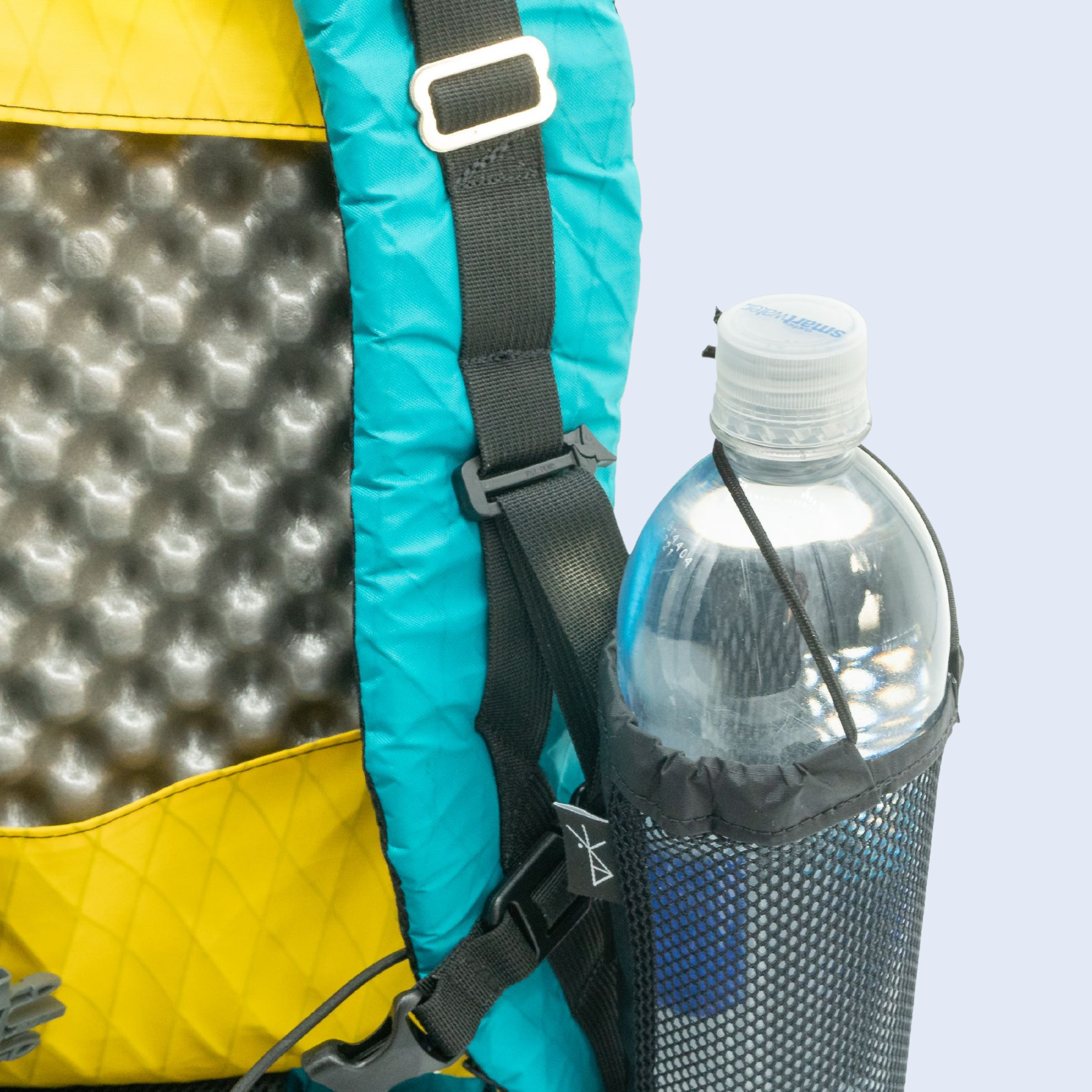

If you’re at all familiar with our brand, you’ll notice that we make several different shoulder strap accessories. We've talked a lot about the water bottle sleeve on this blog, but that's really just one piece of a bigger idea. There's also the Zipper Pocket and the Phone Pocket, and each one serves a different purpose that we hope will make a difference on the trail.
Time on trail taught us that easy access isn't a nice-to-have. It's vital for keeping a hike feeling efficient. Every stop to dig through a pack, every awkward reach for a side pocket, adds up over the course of a day. Multiply that by hundreds of miles and it stops being a minor annoyance and can start to be a real drag on how a hike feels.
And this isn't just a problem that applies to thru-hikers. Anyone carrying a daypack runs into the same friction, just on a smaller scale. A weekend hiker digging for their phone at a scenic overlook has the exact same problem as someone three months into a long trail. The fix is the same too: put the things you reach for constantly somewhere you can actually reach.

Why Your Shoulder Straps Are Prime Real Estate
Hip belt pockets are supposed to solve this problem, but plenty of packs don't have them, and some hikers find their arms hit the pockets while they're walking. That's a common enough complaint that you'll see it repeated in reviews from people who hike almost exclusively with brands like Osprey. If your pack doesn't have hip storage, or the storage it has gets in your way, your shoulder straps are the next best spot.
If you're new to backpacking gear, the shoulder strap is honestly one of the easier upgrades to make. It attaches to nearly any pack, it doesn't change how the pack carries, and it solves a problem you've probably already run into without realizing it.
Two Jobs, Two Pockets: Phone Pocket vs. Zipper Pocket
A shoulder strap phone pocket and a zipper pocket are similar, but ultimately are built for different jobs. Picking the right one comes down to what you're typically carrying and how fast you need to get to it.
The Phone Pocket: Fast Access, Light Protection
The Phone Pocket uses a velcro storm flap, which means you can get your phone out and back in with one hand while your other hand is occupied. It actually has two closure options, and the main velcro flap covers the whole opening for a bit more protection. There's also a secondary webbing strip that holds your phone in place while leaving the charging and aux ports open, which matters if you're running your phone off a battery pack or listening to something while you hike.
It comes in two sizes. Standard measures 6.5 inches tall, 3.5 inches wide when full, and 0.75 inches thick, weighing about 1.3 ounces. Large steps up to 7 inches tall, 4 inches wide, and a full inch thick, weighing about 1.5 ounces. If you're deciding between them, measure your phone with its case on and compare it to those numbers rather than guessing. The Large has enough room to fit a phone alongside a battery pack, which the Standard doesn't really have space for.
It's water-resistant since the fabric itself is waterproof, but the seams aren't sealed, so it'll hold up fine in light to moderate rain. If you're hiking into something heavier, stow the phone in your pack or keep a ziplock on hand.
The Zipper Pocket: More Protection, Still Fast
The Zipper Pocket trades a bit of speed for a lot more weather protection. It uses a water-resistant zipper, which does a better job keeping out rain than the Velcro flap could. It weighs about 1.7 ounces and uses the same X-Pac VX21 material, plus a front mesh pocket is perfect for storing extra snack bars, sunglasses, or a battery pack.
This is the one to reach for if you're carrying something you really don't want to get wet. Satellite messengers, electronics, anything with a battery. Reviewers who've bought both the Phone Pocket and the Zipper Pocket tend to use the zipper version specifically for gear they're more protective of, and keep the Phone Pocket for quicker grab-and-go items.

What Actually Goes Where: Building Your Front-of-Strap System
Once you know the difference between the two pockets, the "what goes where" question gets a lot easier.
-
Phone: Either pocket works. Go with the Zipper Pocket if you're hiking somewhere wet, or if you just want the extra peace of mind.
-
Snacks and electrolyte tabs: The stretchy mesh pocket on either product is built for this. It's visible and accessible enough that you can grab a bar without looking.
-
Sunscreen and lip balm: Small enough to fit in the main compartment of either pocket without crowding out your phone.
-
Battery pack: The Large Phone Pocket or the Zipper Pocket both have room to pair a battery pack with your phone. The Standard Phone Pocket is a little more snug.
-
Small tools or a multitool: The enclosed zipper compartment keeps small gear secure and easy to locate.
-
Trash and wrappers: A strap pocket beats stuffing a wrapper in a hip pocket, where it can slip out without you noticing.
Think of your two shoulder straps as a small storage system rather than just "add a pouch and see what fits." One strap for quick access, one for things that need a little more protection, and you've got a setup that saves you from taking the pack off all day.
Universal Attachment: Will It Fit Your Pack?
Both the Phone Pocket and Zipper Pocket attach using either a gear loop or a daisy chain, and between those two attachment styles, they'll work on the vast majority of backpacking packs on the market. Gear loop packs include brands like Osprey, Gossamer Gear, REI, Granite Gear, Gregory, Deuter, and Kelty. Daisy chain packs include CTUG's own packs along with Hyperlite, Zpack, MLD, ULA, SWD, Hilltop, and Waymark.
The rare exception is a pack with no attachment features on the strap at all, which does happen on some simpler day packs. If your pack has a loop or a daisy chain of any kind, though, you're set.
Both pockets also have an adjustable webbing slider so you can tighten or loosen the upper attachment to span the right distance for your particular strap. There's also a moveable lower attachment point, which lets the pocket sit higher or lower depending on your torso length and what feels comfortable.
Common Misconceptions About Strap Pockets
"One pocket does everything." Not quite. As covered above, the Phone Pocket and Zipper Pocket solve different problems. Buying one and expecting it to handle every job usually means you may be compromising on either speed or protection.
"Water resistant means waterproof." Both products use waterproof X-Pac fabric, but neither pocket is fully sealed against water intrusion in a downpour. Water resistant means it'll shrug off rain and splashes. It doesn't mean you should submerge it or expect zero moisture in a sustained storm.
"These only work on cottage-brand ultralight packs." The attachment system is built around gear loops and daisy chains, which cover mainstream backpacking packs from Osprey to Gregory to Deuter, not just the ultralight cottage brands. If your pack has either feature, it'll work.
A Word on Fit and Comfort
There's no single "correct" spot for a strap pocket, and that's by design. The moveable lower attachment lets you let more slack out of the slider and drop the pocket lower on the strap if a high, centered position feels like it's in your face. Some hikers prefer it right up near the collarbone for the fastest reach. Others let it hang lower, almost like a hip holster.
Don't be afraid to experiment with placement over your first few hikes. The adjustability is there because comfort looks different for every hiker, and finding your setup usually takes a little trial and error before it clicks.
Frequently Asked Questions
What's the difference between a phone pocket and a strap pocket? The Phone Pocket uses a velcro closure for fast one-handed access and light rain protection, while the Zipper Pocket uses a water-resistant zipper for more coverage against wind and rain. Both attach the same way and hold similar items, but the closure style changes how fast you can get in and how protected the contents stay.
Will a shoulder strap pocket fit my Osprey backpack? Yes. Osprey packs use gear loops, which both the Phone Pocket and Zipper Pocket attach to directly. The same goes for other gear loop brands like Gregory, Deuter, and Kelty.
Are backpack strap pockets waterproof? No, they're water resistant. Both pockets use waterproof X-Pac fabric, but the seams aren't fully sealed, so they hold up well in light to moderate rain rather than a sustained downpour or submersion.
Can I fit a battery pack and my phone in the same pocket? It depends on size. The Large Phone Pocket and the Zipper Pocket both have enough room for a phone alongside a battery pack. The Standard Phone Pocket is better suited to the phone alone plus a few small items.
Where should I attach a strap pocket for the most comfortable fit? There's no single right answer. The adjustable slider and moveable lower attachment let you position the pocket higher for faster access or lower if a high position feels crowded. Most hikers find their preferred spot after a hike or two of small adjustments.
Do strap pockets work on day packs, or only backpacking packs? They work on both, as long as the pack has a gear loop or daisy chain on the shoulder strap. Some minimalist day packs skip these features entirely, but most day packs and nearly all backpacking packs include one or the other.
Building a System, Not Just Adding a Pouch
The real value of a shoulder strap pocket isn't the pocket itself. It's what it does to how you move through a hike. No more digging, no more asking your hiking partner to grab something out of your pack, no more twisting an arm back to reach a side pocket. Whether you go with the quick-access Phone Pocket or the more protective Zipper Pocket, you're solving a problem that we built these products around in the first place: getting the stuff you actually use during the day within arm's reach, without adding weight or bulk that gets in your way.
Take a look at the full shoulder strap gear collection to compare both pockets side by side and figure out which setup fits how you hike.